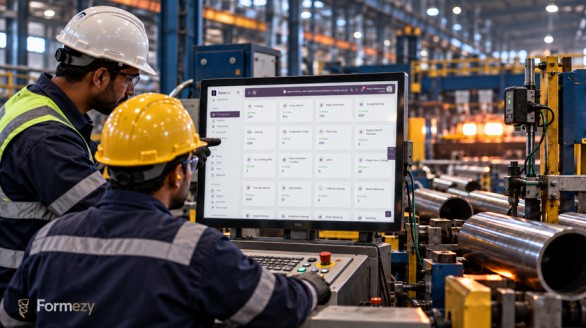
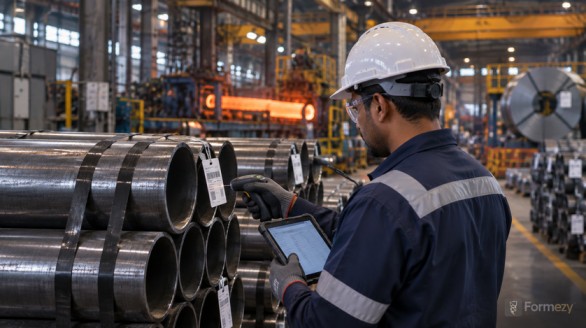
Heat-wise traceability means every finished product — a coil, a bundle of tubes, a box of fasteners — can be traced back to the heat of steel it was made from, and every heat can be traced forward to the customers who received it.
What a heat number is
A heat is one batch of steel from a single melt. The steel mill gives it a heat number and records its chemistry on a mill test certificate (MTC). Because chemistry varies from heat to heat, the heat number is the most important identity a piece of metal carries.
Where traceability usually breaks
Traceability is easy at receipt and hard everywhere after it. It typically breaks when one input becomes many outputs — a mother coil slit into child coils, a billet cut into slugs, a rod coil drawn into several lots — or when many inputs merge into one output, like a bundle made from several runs.
- Registers kept on paper or in separate spreadsheets
- Heat numbers retyped at every stage
- Rework and remnants that lose their identity
- Certificates assembled by hand at dispatch
How ERP makes it practical
In Formezy the heat number is captured once, at goods receipt, together with grade and weighbridge weight. Every stage after that creates new records linked to the old ones: slit coils to their parent, tube lots to their slit coil, bundles to their tubes. Test results are stored against the same lot, so the test certificate can combine the original mill chemistry with your own results without retyping.
Why it matters
Customers in oil and gas, power, automotive and construction increasingly expect full traceability. It also helps internally: when a complaint arrives, you can find every affected bundle in minutes instead of days, and you can see yield and scrap per heat rather than per month.
See how traceability runs step by step in our shop-floor process flows.